The compost we make, and where it goes.
Everything we collect goes to one place: our community compost site in South Brooklyn, at the Marine Park Golf Course, which we run with the Earth Stewards volunteer community. It stays in the borough. Nothing is trucked upstate and nothing goes to a digester.
Food scraps are mostly water. A working pile gets hot, most of that water leaves as vapor, and the microbes breathe out a good share of the carbon as CO2. What is left is the stable part: the humus, the minerals, the life. Your scraps also get layered with wood chips and leaves, so the finished compost is made of more than what came out of your kitchen. We will publish the real ratio from our own scale once the first batch is screened.
The places
Every delivery of finished compost, the place it went, and the businesses whose scraps were in it.
The first batch is still on the site. Compost takes months to finish, so the first deliveries appear here once material that came in on the route has become soil and gone out to a garden or a tree bed. Each one will be listed with its address, what it grows, and which businesses contributed.
A business’s share of a batch is the pounds it put in during the weeks that batch was made from, divided by what everyone put in. Both figures are scale readings taken at stops.
Customers get a referral link that takes $25.00 off for both of you.
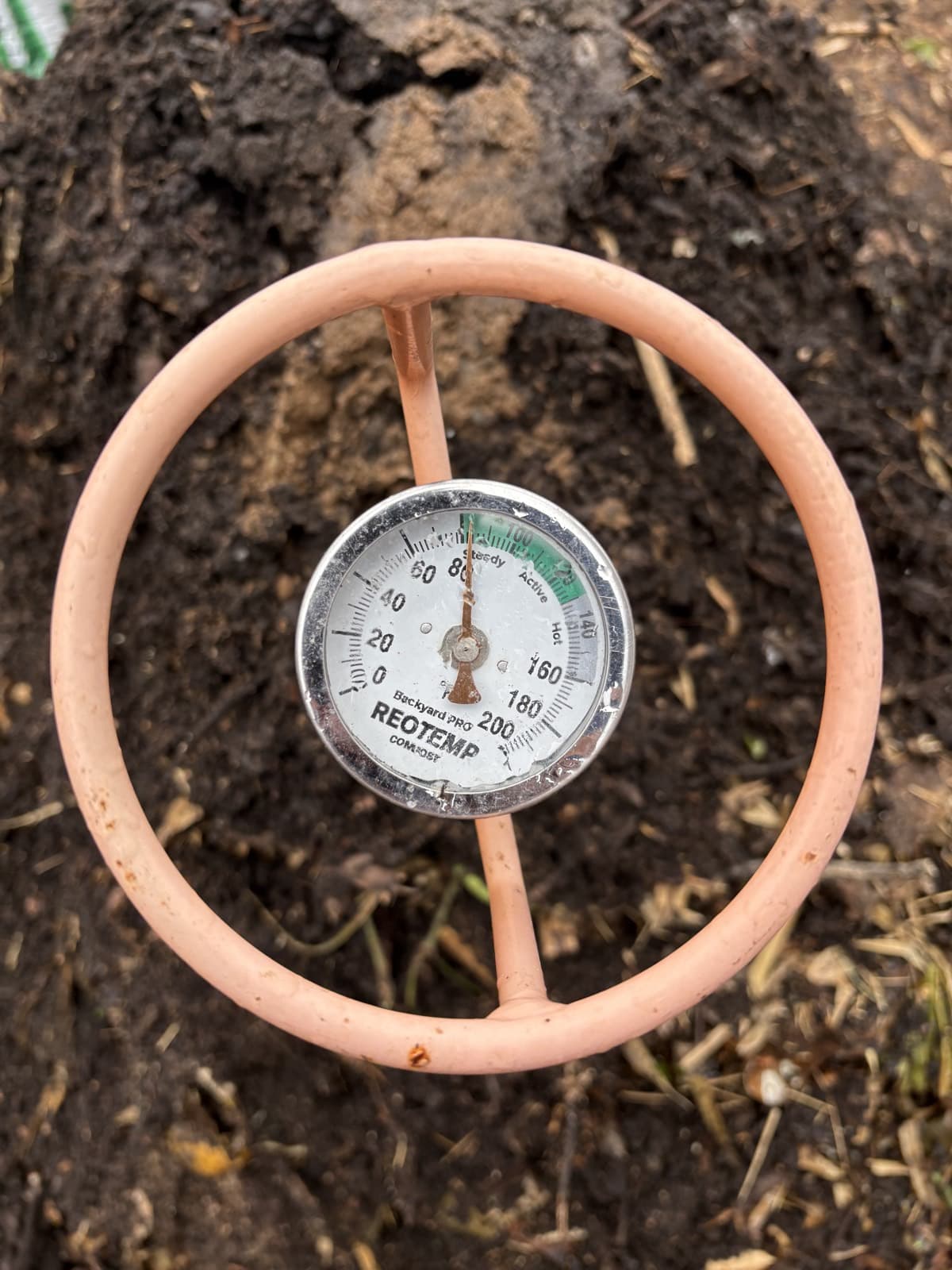
It holds water. Organic matter is what lets soil absorb rain and keep it, so a tree pit or a raised bed with compost in it dries out slower and floods less.
USDA Natural Resources Conservation Service, Soil Health: Soil Organic Matter.
It feeds the soil rather than the plant. Compost carries the microbes, fungi and slow-release nutrients that synthetic fertilizer skips, which is why a garden running on compost needs less of everything else.
US EPA, Composting: benefits of using compost.
It replaces soil a garden would otherwise buy. A community garden or a school bed that receives finished compost is not ordering bagged soil trucked in from somewhere else.
NYC Parks GreenThumb, gardener resources on soil and compost.
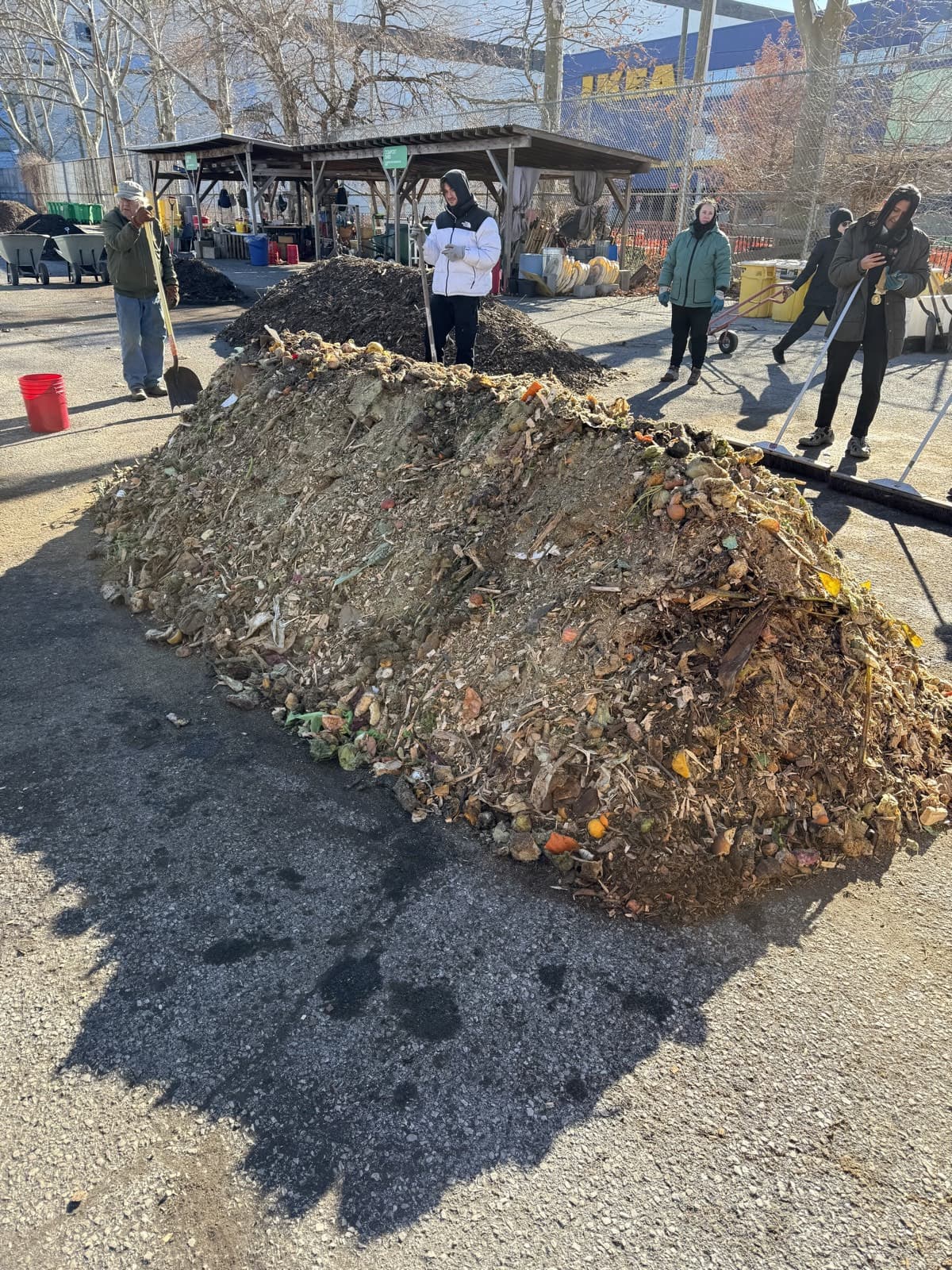
The site is sized to what the borough puts in, and it grows with the route. As more businesses join, we activate more community composting here in the city. What we will not do is truck the material out of it.
A full 5-gallon bucket of food scraps averages about 25 lbs. Every one of them is weighed before it leaves your door, and every pound is accounted for on this page.